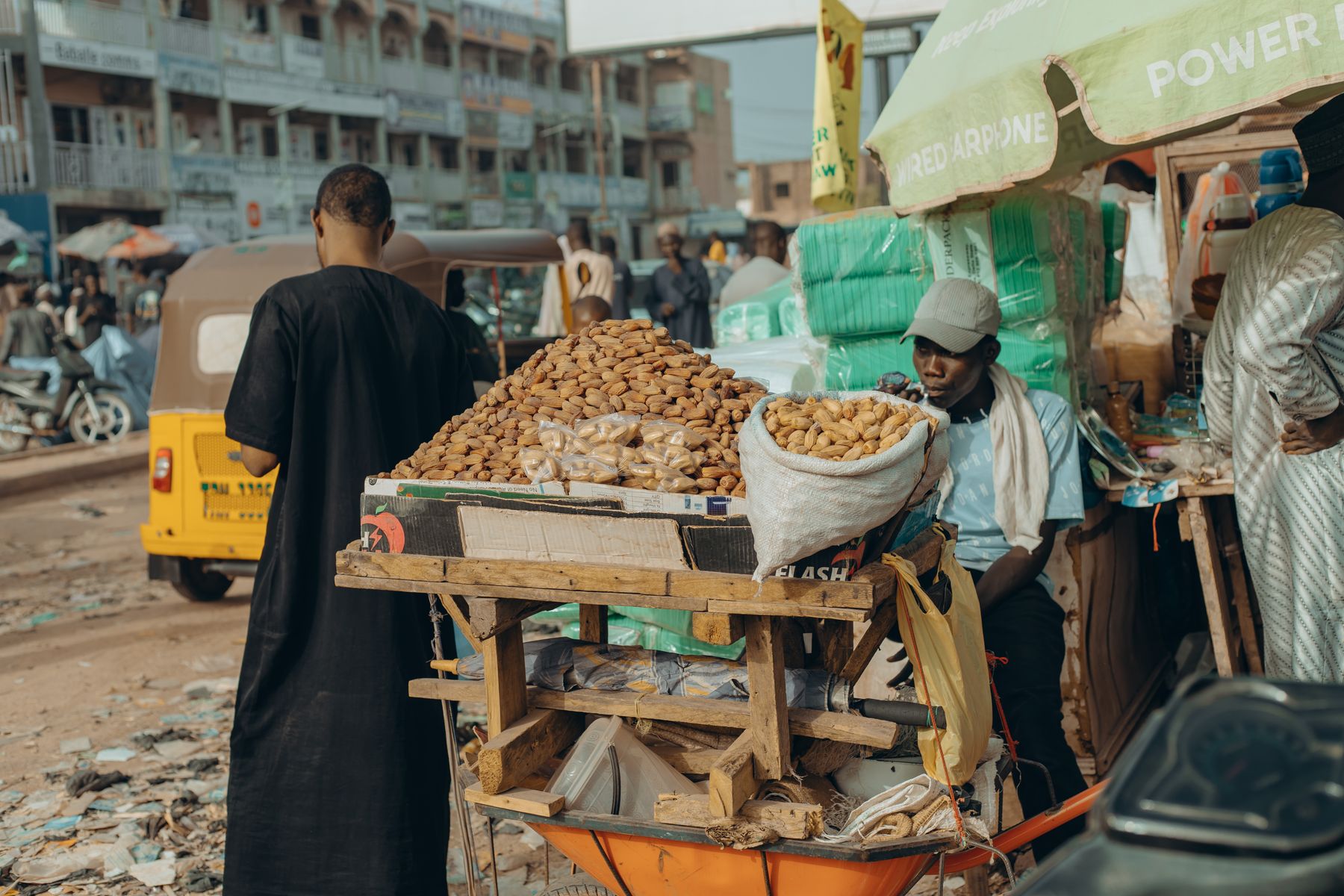
Start on Admiralty Way and Fola Osibo
Begin where the foot traffic is heaviest: the Admiralty Way service lanes between the Lekki Phase 1 roundabout and Fola Osibo Road. From about 5pm the suya stands set up their grills, and by 7pm the whole stretch smells of pepper and charcoal. Suya at these roadside stands is the classic opener: thin beef or chicken skewers dusted with yaji, wrapped in newsprint with raw onion and tomato. Budget a few thousand naira for a couple of sticks; portions are small, so order more than you think. Ask for less yaji if you are unsure about heat, and watch how the vendor handles raw meat before you commit.
The side streets off Fola Osibo Road are where the walk gets interesting. Look for women selling moin moin and fried plantain from insulated coolers near the junction with Bisola Durosinmi-Etti Road; both are cheap, filling and easy to eat on foot. Grilled corn, roasted over coals and rubbed with pepper and lime, turns up on the same corners from around 6pm. If you want one sit-down break in the evening, buy your snacks here and eat them with a cold drink at one of the small outdoor bars along the road rather than standing at the stall.
The Agege bread and akara circuit
Walk north towards the Lekki Phase 1 gate and you hit the akara stands. Fresh bean cakes fried to order, scooped out of a wide pan and served with soft Agege bread or pepper sauce, are the best-value eating on the whole walk: a paper wrap of three or four costs roughly what you would pay for a bottle of water in a hotel lobby. The trick is timing. Akara is a breakfast food in Lagos, so the evening sellers are fewer, and the ones who do trade from about 6pm are usually frying for a crowd that has just left work.
If you are staying in a hotel along the Lekki-Epe Expressway, ask your front desk which direction the nearest evening food cluster is, because the expressway service roads are long and not every stretch has one within walking distance. The stretch around the Ikate-Elegushi axis has more roadside grills than the quieter roads near Jakande, where you will mostly find small shops rather than street food. A short ride-hailing trip between clusters is normal here; walking the full corridor on foot is not practical after dark.
Seafood, pepper soup and what to skip
For something more substantial, the roadside fish and pepper soup spots around Ikate and the Ikota area come alive after 7pm. Grilled tilapia or catfish, scored and rubbed with pepper, takes 20 to 30 minutes over coals, so order first and walk to the next stall while it cooks. Pepper soup is served in small bowls and is hotter than most visitors expect. These places are informal and cash is still the default, so carry small notes. Weekday evenings are calmer; Friday and Saturday nights around Admiralty Way get busy and parking is difficult.
What I would skip: the pre-fried chicken and puff-puff trays sitting under lamps at permanent kiosks, which tend to be reheated rather than fresh, and anything sold from an unmarked cool box without a visible seller nearby. Also skip the temptation to eat while walking on the busier roads; the service lanes have uneven surfaces and motorcycles move fast. If you only have one evening, book a hotel within walking distance of Admiralty Way or Fola Osibo Road, eat your way along those two streets between 6pm and 8pm, and take a ride-hailing car back.
Practical timing and where to stay
The dry months from November to February are the most comfortable for an evening walk, with less humidity and fewer downpours; the rainy season from June to September can end a food walk abruptly, so keep your route short and close to your hotel. Most stalls start setting up around 5pm and peak between 7pm and 9pm. Carry cash in small denominations and a bottle of water, and expect your clothes to smell of smoke afterwards. Sanitation standards vary between vendors; pick the stalls with the longest queues and the fastest turnover.
For a hotel base, the Lekki Phase 1 area around Admiralty Way and Fola Osibo Road puts you closest to the food without needing a car, while properties near Ikate and the Ikota axis suit travellers who want more space and do not mind a short ride for dinner. Check the hotel's location on a map against the specific street you plan to eat on, and confirm whether the restaurant stays open late if you would rather eat indoors. Book midweek if you can; weekends fill faster along this corridor.
Questions, answered
What time do the street food stalls in Lekki start in the evening?
Most vendors set up from about 5pm and are busiest between 7pm and 9pm. Suya grills on Admiralty Way tend to light up first, while fish and pepper soup spots around Ikate pick up after 7pm because grilling takes longer.
How much cash should I carry for an evening snack walk in Lekki?
Carry small notes and expect to spend modestly per stop; suya, akara and grilled corn are cheap individual items, while a whole grilled fish is a bigger outlay. Prices vary by vendor and season, so check before ordering rather than relying on fixed figures.
Which part of Lekki is best for a walkable evening food route?
The streets around Admiralty Way and Fola Osibo Road in Lekki Phase 1 have the densest cluster of stalls within walking distance. The Ikate and Ikota axes have good roadside grills too, but the distances are longer, so plan on a short ride-hailing trip between stops.
Doing good is the business: every booking through Stay Lekki funds one verified tonne of carbon removal — same room, same price, no markup.
Start Your Search