Kalakuta Republic Museum
Fela Anikulapo Kuti's old Ikeja house — declared its own republic, now preserved as the shrine to Nigeria's Afrobeat king.
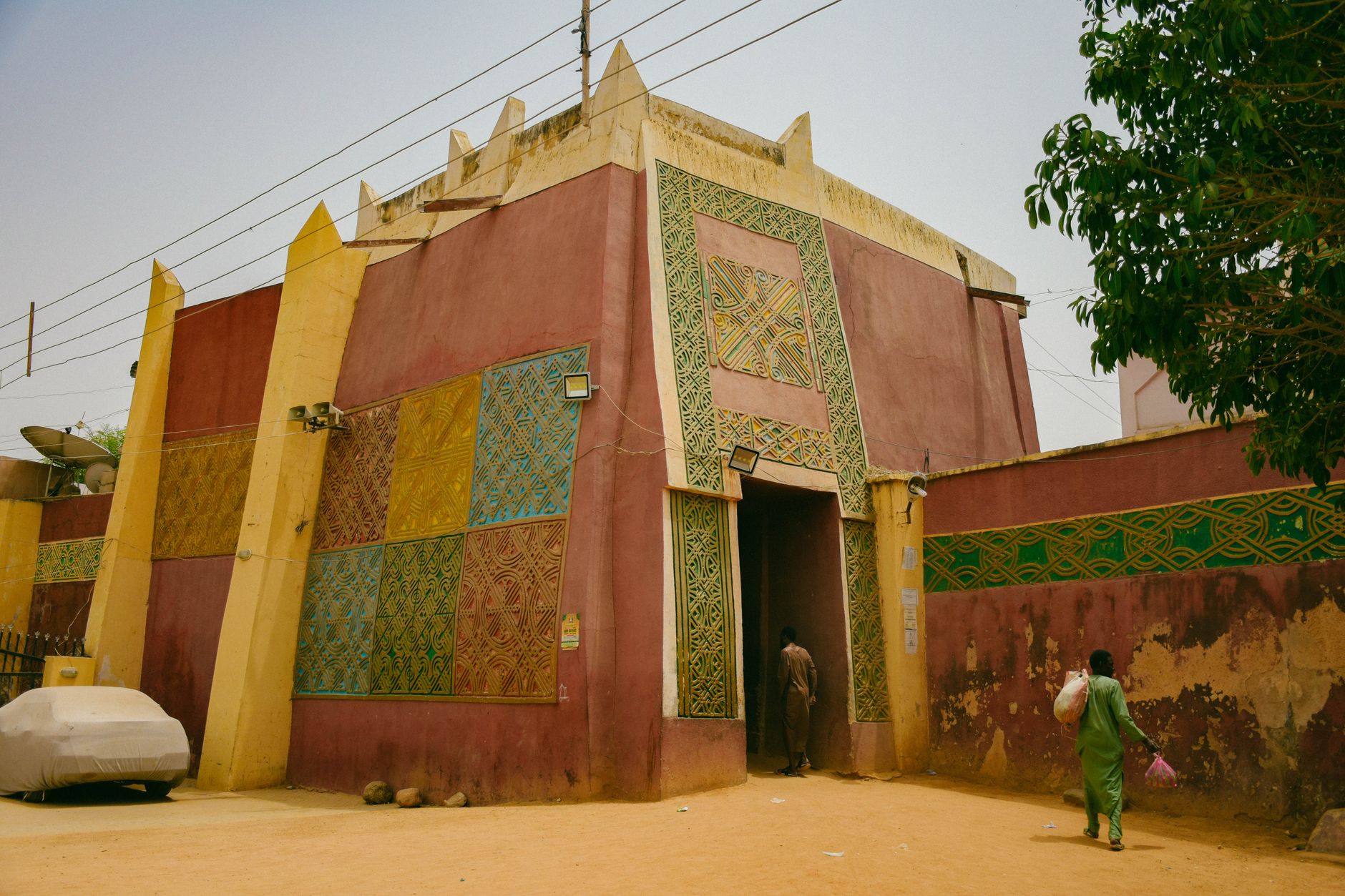
The Kalakuta Republic Museum is the yellow-walled house on Gbemisola Street in Ikeja that Fela Anikulapo Kuti lived, played, protested and eventually died in. He declared the property an independent republic in 1970, and after his death in 1997 the family, led by Yeni Kuti, converted it into a museum. It is a small, honest, deeply atmospheric place — three floors of Fela's clothes, saxophones, letters, records, photographs and the bedroom, kept exactly as it was.
The tour starts in the ground-floor sitting room with a portrait wall and the founding declaration of Kalakuta Republic. First floor holds his instruments, stage costumes and gold records. The second floor is the bedroom — still with his shoes lined up, still with the papers on the desk — and the rooftop terrace where he addressed the crowd and now hosts a small bar. Guides walk you through the rooms with stories that no plaque could carry. Allow yourself to be talked to; the guides here are family friends.
Combine the visit with a Sunday jump at the New Afrika Shrine ten minutes away, where Femi and Seun Kuti still play. The museum is 45 minutes from Lekki Phase 1 in traffic — go on a Tuesday or Wednesday afternoon for the shortest drive. Bring cash. Photographs are allowed in most rooms. The rooftop bar serves cold Star beer and is worth staying for as the sun goes down.
Getting there is the hardest part of the visit, and it is worth planning as carefully as the museum itself. From Lekki Phase 1 the standard run is Lekki-Epe Expressway to Ozumba Mbadiwe, over Falomo Bridge into Ikoyi, across the Third Mainland Bridge, off at Ojota onto Ikorodu Road, then Mobolaji Bank Anthony Way and Obafemi Awolowo Way into Ikeja GRA, turning off Joel Ogunnaike into Gbemisola Street — around 30 km, 45 minutes at 11:00 on a Tuesday, closer to two hours if you leave Lekki after 15:00. Book a Bolt or Uber and expect roughly $15 to $25 each way; the smart move is to agree a waiting fee with the driver rather than hunt a ride back from a residential street at dusk. Doing it by danfo means Lekki Phase 1 to Obalende for under $1, then an Ikeja-bound bus for under $2 — cheap, but budget two and a half hours.
Costs are simple and the museum does not nickel-and-dime you. Entry is $8 for an adult and $4 for a child, and that includes the guided walk-through by a member of the household — there is no audio guide to buy and you would not want one, because the value here is entirely in being told things out loud. Groups of ten or more get a discount if you call ahead. A drink on the rooftop comes with the ticket; further bottles of Star or Gulder run about $2 to $3, and small chops if the kitchen is running. T-shirts, prints and the occasional vinyl reissue sit between $10 and $25. Bring cash in small notes — the card terminal depends on a network that fails often. A whole half-day from Lekki for two people, ride-hailing both ways, drinks and a souvenir, lands around $60 to $80.
Timing decides what kind of visit you get. Doors open 11:00 and close 19:00, Tuesday to Sunday, shut all day Monday, and the last tour realistically needs to start by 17:30 if you want the full hour and a half. The quietest window is 11:00 to 13:00 on a Tuesday or Wednesday, when you may be the only visitors and the guide will sit with you. Come at 17:00 instead if you want the roof at its best — the light drops fast over the GRA rooftops and the bar fills. October is Felabration month, the week around Fela's 15 October birthday, when the house and the New Afrika Shrine are packed and celebratory; expect crowds and slower tours. Avoid the June and July peak of the rains, when the drive doubles and the terrace is unusable, and avoid December entirely — Lagos traffic in the last three weeks of the year is unforgiving.
This suits music people, anyone with an interest in 1970s Nigerian politics, and teenagers who arrived through Afrobeats and do not yet know where it came from. It does not suit wheelchairs or unsteady knees: four levels, steep narrow domestic staircases, no lift, and the bedroom and roof are the whole point. If mobility is an issue, the ground-floor rooms and the courtyard are still worth the $8, but ask before you commit. Small children will find little to touch and are done in 40 minutes, and the guides talk plainly about the army raid, the arrests, the marijuana and the 27 wives, so decide in advance how much of that you want a nine-year-old to hear. It is a good rainy-afternoon plan since almost all of it is indoors. It is a bad plan for a spare hour — the drive alone eats that.
Fold it into an Ikeja half-day rather than a special trip. The New Afrika Shrine in Agidingbi is a 10 to 15 minute drive; Femi Kuti's Sunday jump and the midweek sessions are the reason to time your museum visit for late afternoon and roll straight on. Ikeja City Mall at Alausa, 10 minutes away, has a cinema and air conditioning if you need to kill time before the Shrine opens. Bature Brewery on Sasegbon Street in the GRA is five minutes from the museum gate for craft beer, and Isaac John Street does suya after dark. Computer Village on Otigba Street is ten minutes off and worth it only if you need a phone part. If you are staying in Ikeja — Lagos Marriott Hotel Ikeja and Radisson Blu Lagos Ikeja Hotel are both a short hop from Gbemisola Street — you can walk part of this. Do not try to pair it with Nike Art Gallery in Lekki on the same day; the bridge will beat you.
Two honest corrections before you go. First, this is not the Kalakuta that a thousand soldiers burned down in February 1977 — that house stood in the Mushin area, and this Ikeja property is where Fela moved afterwards, so do not arrive expecting ruins or a reconstruction of the raid. Second, it is a family house turned museum, not a national institution: labels are thin, a couple of rooms are almost bare, the power flickers, and a bad guide can walk you through in 35 minutes. Ask questions and it opens up; stay silent and you will feel short-changed. There is no restaurant, so eat before you come. Photography is fine in most rooms but ask in the bedroom. Ignore anyone offering a tour at the gate — the guide is included in your ticket and lives in the building.
Hours & entry
Tue-Sun 11:00-19:00 · Closed Mondays
What to see
{'what': "Fela's preserved bedroom", 'where': 'Second floor, east room'}
{'what': 'Stage costume and saxophone collection', 'where': 'First-floor central room'}
{'what': 'Rooftop terrace and portrait wall', 'where': 'Third-floor open terrace'}
Tips from the ground
Come Tuesday or Wednesday afternoon to beat the weekend crowds
Ask for Yeni or Motunrayo — the family-guided tours are the best
Stay for a beer on the rooftop — it is included in the ticket
Questions, answered
How much is the museum?
$8 per adult, $4 per child. Guided tour included. There is no separate audio guide and no extra charge for the bedroom or the roof, and one drink at the rooftop bar comes with the ticket. Further bottles are about $2 to $3, and shirts or prints in the small shop run $10 to $25. Bring cash in small notes: the card terminal depends on a network that drops regularly, and the nearest reliable ATMs are back out on Joel Ogunnaike and Awolowo Way.
Are there free entry hours?
No free hours. Group discounts for 10+ visitors. The $8 adult and $4 child rate applies at every hour the house is open, including the busy Felabration week around 15 October. School and university groups should negotiate on the phone rather than at the gate, and ten or more visitors booked ahead is the only meaningful saving on offer. Since the guided tour is bundled into the ticket, there is nothing to add on once you are inside except drinks and souvenirs.
How long should I plan?
1-2 hours for the museum, longer if you stay for the rooftop bar. Reckon on 15 minutes in the ground-floor sitting room, 25 on the first floor with the saxophones and costumes, 20 in the preserved bedroom, then as long as you like on the terrace — most people give it 30 to 40 minutes at sunset. Add 45 to 90 minutes of driving in each direction from Lekki Phase 1 and the honest figure is a four to five hour half-day, not a quick stop.
When is it closed?
Closed Mondays. Open Tue-Sun 11:00-19:00. Arrive by 17:30 at the latest so the guide has time to take you through all four levels before closing. Public holidays and family occasions can close the house without notice, so ring the same morning if your schedule is tight. During Felabration in October the museum keeps its normal hours but runs far busier, and Sundays fill up in the late afternoon as visitors head on to the New Afrika Shrine afterwards.
Do I need to book?
No booking needed for individuals. Groups should call +234 803 402 3320. Couples and solo visitors can simply knock at the gate during opening hours and a guide will pick you up. Groups of ten or more should call a day or two ahead so the family can put a proper guide on it and agree the discount. It is also worth calling on the morning of a public holiday to confirm the house is open, and worth arranging your ride-hailing return before you arrive.
What is the nearest stop?
Gbemisola Street, Ikeja GRA. 45-min drive from Lekki via Third Mainland Bridge. The full route is Lekki-Epe Expressway, Ozumba Mbadiwe, Falomo Bridge, Third Mainland Bridge, off at Ojota, then Mobolaji Bank Anthony Way into the GRA. By bus it is Lekki Phase 1 to Obalende for under $1, then an Ikeja danfo for under $2. The Red Line rail has an Ikeja station but no useful Lekki end. Parking is a handful of spaces on a narrow residential street.
Doing good is the business: every booking through Stay Lekki funds one verified tonne of carbon removal — same room, same price, no markup.
Start Your Search